Introduction
Describing experimental research can be complex and ambiguous. Studyflow is a visual language for describing scientific workflows in a way that is both human-understandable and machine-readable. It extends BPMN1 so researchers can model experiments, data collection, analysis, and reporting in a single formal diagram.
The core idea is simple: represent a study as connected elements such as events, activities, decisions, and data. That gives you a diagram that is easier to discuss with collaborators, easier to serialize for tools, and easier to reuse across studies.
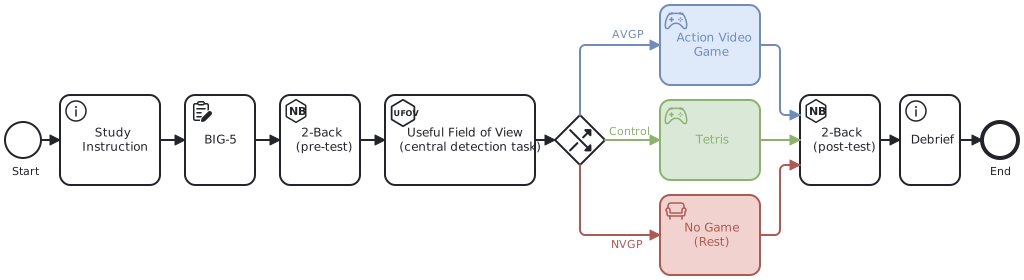
Here is an example:
What you can do with Studyflow
Studyflow diagrams are human-friendly, machine-readable, and executable. Common uses include:
- Design experiments: plan and simulate the steps of your study before conducting it.
- Document protocols: create clear and detailed representations of your experimental procedures.
- Communicate methods: share your analysis workflows with collaborators, reviewers, funders, and other stakeholders.
- Automate workflows: integrate with tools to automate data collection, analysis, and reporting.
- Reproduce studies: replication by providing a structured, version-controllable representation of all the steps of an experiment.
- Report and publish: include studyflows in research papers, embed them in standard SVG format, and link them to data and code repositories.
Start here
If you are new to the project, use one of these paths:
- Get started: walk through a complete example.
- Open the Modeler app and follow its usage guide.
- Explore the Examples for cognitive tasks, CONSORT, analysis pipelines, MLOps, and more.
- Read Specification.
Get in touch
Studyflow is an open source project and contributions are welcome. Please visit our GitHub or reach out by email at [email protected].